Blog

  • Jheri Curl June: DāM-FunK’s “Searchin’ 4 Funk’s Future”

    Jheri Curl June: DāM-FunK’s “Searchin’ 4 Funk’s Future”

    We make a big deal every year about “late-era Jheri Curl Music” and its apparent obsolescence at the hands of, chiefly, New Jack Swing; but the truth is, reports of J.C.M.’s death have always been greatly exaggerated. Yes, the wetter, silkier side of contemporary R&B did fall out of favor, replaced by harder beats and more hip-hop-inspired posturing; but there have always been keepers of the electro-funk flame, whether through direct samples, influence, or simply existing artists continuing to plough their furrow despite the pop world’s ever-shifting winds. It’s to these artists, the Jheri Curl faithful, that we’re turning our attention in the last few days of JCJ.

    And to kick things off, I can’t think of a better artist than Damon Garrett Riddick, better known as DāM-FunK. The Southern California-based Riddick isn’t a Jheri Curl revivalist so much as a disciple; he started making music as a teen in the late ’80s and early ’90s, some of which can be heard on the 2010 compilation Adolescent Funk. But he didn’t release his debut solo album, the sprawling 2-CD/5-LP (!) Toeachizown, until 2009, well after his chosen brand of synthesizer-assisted grooves had acquired a patina of retro cool. This contradiction is woven into the fabric the album itself: On the one hand, its ’80s credentials are legit, with production by no less a personage than first-wave Jheri Curl architect Leon Sylvers III; but on the other hand, its presence on underground hip-hop label Stones Throw, home of J Dilla and Madvillain, situates it indelibly in mid-to-late-2000s crate-digger culture.

    None of which, incidentally, is a bad thing: in fact, DāM-FunK’s cult positioning grants him an artistic freedom and fluidity few of the artists we typically cover here ever had the opportunity to flex. Case in point: “Searchin’ 4 Funk’s Future,” a musical mission statement of sorts that stretches its atmospheric synth pads, vintage drum programming, and Riddick’s muffled falsetto to an experimental near-eight-minute runtime. If J.C.M. Mark I took as its template Prince‘s run of early-’80s albums, then Mark II–at least as interpreted by DāM-FunK–sounds more like a high-generation Prince bootleg; and speaking as a big fan of Prince bootlegs, that’s a really interesting space to occupy.

    We’ll be back tomorrow to highlight more post-Jheri Curl jams; in the meantime, playlists are below:

  • Jheri Curl June: Cindy’s “Must Be Lucky 〜愛の国へ〜”

    Jheri Curl June: Cindy’s “Must Be Lucky 〜愛の国へ〜”

    Mayumi Yamamoto, also known as Cindy, was a prominent Japanese R&B singer and songwriter. Throughout the 1980s, she worked with Japanese fusion musicians as well as Stevie Wonder, who produced her debut album! In previous years, we’ve talked about how late-era Jheri Curl Music morphed into New Jack Swing, but Cindy’s 1990 song “Must Be Lucky 愛の国へ〜 (Ai no Kuni e)” is a great example of the other route, veering into ’90s dance music.

    Believe it or not, it’s already our final week of Jheri Curl June 2K23! We’re doing something a little different for the last four days, highlighting the lasting legacy of Jheri Curl Music with some “J.C.M. Revival” picks from the 2000s and later. In the meantime, listen to the rest of this year’s picks on the playlists below:

  • Jheri Curl June: The Mac Band’s “Roses Are Red”

    Jheri Curl June: The Mac Band’s “Roses Are Red”

    The last week or so of Jheri Curl June is always a bittersweet experience, because with each passing day you’re reminded of the genre’s impermanence. Like the beautiful, delicate flower it was, Jheri Curl Music bloomed for only a short time; by the end of the ’80s, it was all but a distant memory. But even these waning years, there were still echoes of the J.C.M. glory days to be heard.

    My wife introduced me to one such echo, “Roses Are Red” by Flint, Michigan’s own Mac Band, the other day. Led by singing brothers Charles, Derrick, Kelvin, and Ray McCampbell, the group were signed to MCA Records in 1986 after winning that year’s Budweiser Showdown, a nationwide talent contest organized by the Houston-based Starstream Records. “Roses Are Red” was the third and most successful single from their 1988 debut album, which was confusingly titled The Mac Band Featuring the McCampbell Brothers and produced by multi-year JCJ alums L.A. Reid and Babyface, with musical contributions by David Lewis of Atlantic Starr.

    Like other LaFace productions of its vintage, “Roses Are Red” captured a transitional moment, with the hard-hitting drums (played by L.A. himself) heralding the coming of New Jack Swing. But just watch the video above, which looks like a group of uncles getting a few wine coolers deep and spontaneously trying to recreate Prince‘s video for “When Doves Cry”; these guys clearly had one foot in the mid-’80s, and you know what, I celebrate them for that.

    We’ll close out this year’s edition of Jheri Curl June next week! In the meantime, here are the playlists:

  • Jheri Curl June: Full Force’s “Old Flames Never Die”

    Jheri Curl June: Full Force’s “Old Flames Never Die”

    Okay, so we covered Full Force back in our very first year of Jheri Curl June, but the song I picked wasn’t their best by any means and I got in some jabs at the group. Though I still stand by those jabs, Full Force deserves better. Every time I watch the House Party movies, I’m struck by the fact that their role as the bullies is one of the best parts of the films (seriously, try to watch House Party 3, 4, or 5 and tell me I’m wrong,) and their “Ain’t My Type of Hype” is THE most memorable song in the first movie, appearing during the iconic dance-off scene.

    But even before House Party, Full Force were successful producers and hitmakers in their own right. And their second album, Full Force Get Busy 1 Time, is wall to wall late-era Jheri Curl bangers. “Old Flames Never Die” even sounds a bit like, dare I say, an unreleased Prince track from the early ’80s, or a song that would feel at home on the Time‘s first album. It’s simple and funky, with a little New Wave-y flare and a fun interpolation of Sly and the Family Stone‘s “Everyday People.”

    So, there you go, I’ve managed to finally write something about Full Force without roasting them because, despite all appearances, I actually love Full Force. I mean, they are an ’80s R&B group with Jojo’s Bizarre Adventure character bodies who all dress like “Macho Man” Randy Savage and have Jheri curls. What is there NOT to love?

    We’ll be back tomorrow to wrap up week three of Jheri Curl June 2K23! In the meantime, check out the rest of our picks this year in the playlists below:

  • Jheri Curl June: Sylvester’s “Mutual Attraction”

    Jheri Curl June: Sylvester’s “Mutual Attraction”

    I’ll confess that this is one I’ve been sitting on for a while, mostly because Sylvester and Jheri Curl Music are two great tastes that don’t necessarily taste great together. Sure, there’s some overlap–both 1982’s All I Need and 1983’s Call Me have the odd synth squiggle that sets my Jheri sense atingle–but by and large, the “Queen of Disco”‘s dominion was squarely in the dance/Hi-NRG pocket: of the same lineage as the music we celebrate, yet ultimately distinct.

    Still, I can’t seem to let go of the idea of exploring the common ground between Sylvester and J.C.M.; so, what the hell, here’s the title track from his final album, 1986’s Mutual Attraction, arguably as close as he ever got to orthodox J.C.M. The song, like its parent album, is a little more sedate and muted than Sylvester’s usual fare–likely one reason why Mutual Attraction is rarely cited among his greatest work. But his soaring falsetto remains in fine form–he hadn’t yet contracted the AIDS-related illness that would tragically end his life just two years later–and look, if Sylvester of all people wanted to take a break from the dance floor, who are we to tell him no? It may not be “Do You Wanna Funk” or “You Make Me Feel (Mighty Real),” but “Mutual Attraction” is the smooth and silky cooldown we didn’t know we needed.

    There’s more Jheri Curl and Jheri Curl-adjacent music–uptempo and otherwise–in the playlists below:

  • Jheri Curl June: Oran “Juice” Jones’ “The Rain”

    Jheri Curl June: Oran “Juice” Jones’ “The Rain”

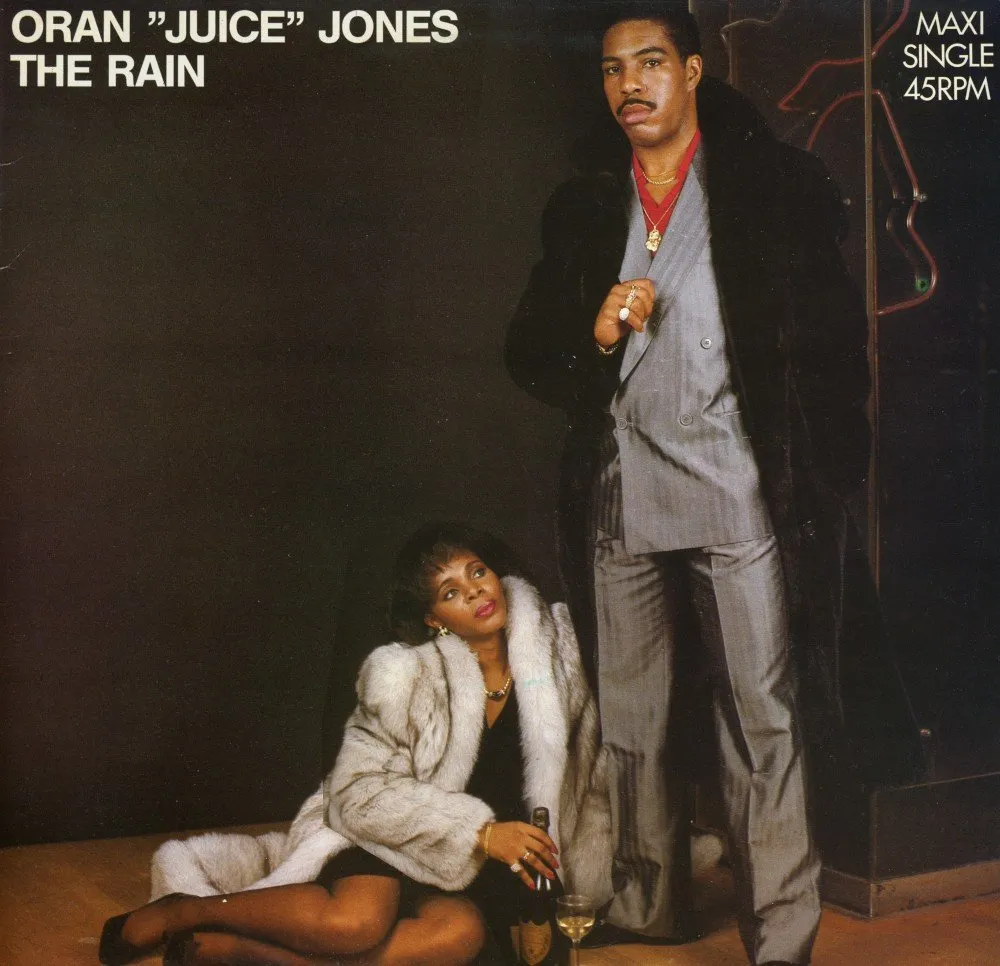
    It’s amazing that in the nearly 10 years we’ve been doing Jheri Curl June, we have never picked Oran “Juice” Jones. It seemed like such a glaring oversight that I actually looked back through our playlists and blog posts from previous years to make sure I wasn’t picking a duplicate song. But no: here we are, in our ninth year of Jheri Curl June, finally inducting Oran “Juice” Jones.

    If you read yesterday’s post, then you’re already familiar with what Carl Carlton would do if another man touched his mama jama. Well, “The Rain” is basically a list of what Oran “Juice” Jones would do if his mama jama touched another man. This includes, but is not limited to: emptying his bank account, cancelling all his credit cards, and threatening to run up on her and do a Rambo. Basically, just short of shoving jewelry up his ass and dumping urine on his hair like Razz P. Berry in the SNL parody.

    Enjoy this and other infidelity jams on our playlist below:

  • Jheri Curl June: Carl Carlton’s “Private Property”

    Jheri Curl June: Carl Carlton’s “Private Property”

    Over the weekend, I attended a Record Riot in nearby Frederick, Maryland; and, this being the midpoint of June, you could say I had Jheri Curl Music on the mind. I ended up walking out with a solid armful of vintage Jheri Curl on vinyl, including Break Out by the Pointer Sisters, Word Up! and Alligator Woman by Cameo, and today’s pick, the 1985 album Private Property by Carl Carlton.

    Long-time Jheri Curl Juners will recognize Carlton’s 1981 hit “She’s a Bad Mama Jama (She’s Built, She’s Stacked)” as the subject of our first-ever J.C.J. post way back in 2014. That song, written and produced by the ever-freaky Leon Haywood, was Carlton’s second-biggest hit after 1974’s “Everlasting Love.” The title track of Private Property, on the other hand, was not written by Haywood (it’s credited to Bar-Kays and Ebonee Webb manager/producer Allen A. Jones), but you’d be forgiven for thinking otherwise because it’s basically the same damn song; if you told me Carlton created the track by singing new lyrics over a slight rearrangement of his earlier hit, I’d honestly believe you. The only real difference is that now he’s landed the bad mama jama of his dreams, and is warning everyone within earshot to keep their distance: “Can you read the sign that says / ‘No trespassing’ from her feet to her head / ‘Cause all her body parts are P.V.T. / ‘Cause everything she has belongs to C.C.” It’s a musical sequel equal parts heartwarming (Carl’s found love!) and offputting; one hopes there’s a third song in the trilogy where he finally realizes that bad mama jamas’ bodies belong to themselves.

    Look, I’m not gonna lie, “Private Property” is a pale retread of “Mama Jama,” and the American record-buying public broadly agreed: the track only reached Number 28 on the R&B charts, while its predecessor went as high as Number 2. But I’ve long maintained that the key to the magic of Jheri Curl Music lies less in its milestones than its mediocrities, and this is exactly the kind of record I will always love to buy for five dollars sight unseen. Plus, of the tracks on the album, only “Private Property” and the even more minor hit “Slipped, Tripped (Fooled Around and Fell in Love)” (which also kinda sounds like “Bad Mama Jama,” if I’m being honest) are currently available on streaming services; I don’t know if the rest of it is worth listening to, but I’m excited to find out.

    In the meantime, you can stream “Private Property”–and our other picks from Jheri Curl June 2023 to date–below:

  • Jheri Curl June: Evan Rogers’ “Don’t Jump to Conclusions”

    Jheri Curl June: Evan Rogers’ “Don’t Jump to Conclusions”

    If we’ve learned anything from our writeup on L.A. Reid back in 2016, it’s that if there is a successful songwriter and producer from the last 30 or so years, they probably had a Jheri Curl album of their own in the mid-’80s. Well, here is Evan Rogers, one half of a hitmaking duo with Carl Sturken who would later produce for everyone from Evelyn “Champagne” King to Christina Aguilera, and even help to build thee Robyn Rihanna Fenty‘s career.

    Sturken and Rogers would eventually form the group Rhythm Syndicate and score a couple of hits in the ’90s, but back in 1985, Rogers released his solo album Love Games, which contains the very System-sounding song “Don’t Jump to Conclusions.” That’s our pick for the day, but the whole album is a bounty of mid-decade Jheri Curl Music: including “Full-Time Lover,” a slow jam duet with the aforementioned Evelyn King, and even a cover of Prince‘s “Private Joy.” Now that we’ve discovered Sturken and Rogers’ place in the Jheri Curl June Extended Universe, I’m sure we’ll be hearing more from them, whether as artists or producers.

    But for now, here’s this month’s playlist. We’ll be back on Monday for more Jheri Curl June!

  • Jheri Curl June: Lucky Rosenbloom’s “Keep Your Faith in God”

    Jheri Curl June: Lucky Rosenbloom’s “Keep Your Faith in God”

    Twice already this week, we’ve remarked that an apparently secular Jheri Curl June selection could also work well as a gospel song. Well, for today’s song, we can do away with the subtext: Lucky Rosenbloom’s “Keep Your Faith in God” is, unequivocally, Jheri Curl Gospel–J.C. for J.C., if you will. The song first came to my notice in an Instagram post by the vinyl reissue label Numero Group, whose compilation Purple Snow: Forecasting the Minneapolis Sound is basically a holy text in these parts. Numero, I learned, had repressed the obscure 1985 single; I took one look at the cover, depicting Rosenbloom posed casually with his Korg keytar and guns out, and I knew this song was making the playlist this year.

    I’ll spare you an extended biography of Rosenbloom, if only because I’m already dangerously close to falling down a rabbit hole and I don’t want to be here all night; suffice to say that he’s something of a fixture in Twin Cities local media, his name cropping up frequently as a prominent Trump supporter and self-proclaimed “only African-American firearms instructor in Minnesota.” Back in 1985, though, he was a less controversial figure, best known as the host of cable access show Lucky Mania TV, where according to Numero he “encouraged kids to say no to drugs and take their vitamins.” This context helps explain “Keep Your Faith in God”‘s lo-fi, vaguely Tim and Eric-esque vibe, as Rosenbloom–over a primitive electronic pre-programmed beat–asks in his surprisingly high voice for “everybody who believes in God to get up out of your seat and stand up, because we’re about to have some fun.” The song proceeds with Rosenbloom continuing to placidly whip up the congregation over swathes of synthesizer (presumably the aforementioned Korg). Over the fade, he chuckles, “Who says that people who believe in God can’t have fun, huh?”

    “Keep Your Faith in God” is unlike any other song we’ve ever covered for Jheri Curl June; it’s less “wet and silky ’80s R&B” than borderline outsider music. Had Lucky Rosenbloom been a fringe media figure in pretty much any other urban center, we’d probably never have heard of him; but he just happened to be from Minneapolis/St. Paul, and took cues from the local music scene when he recorded this weird, weird little record. As far as I’m concerned, this J.C.–I can’t speak for the other one–is a little bit richer for it.

    More Jheri Curl Music, both sacred and secular, can be heard in the playlists below:

  • Jheri Curl June: Alicia Myers’ “Appreciation”

    Jheri Curl June: Alicia Myers’ “Appreciation”

    I have a theory that most, if not all, of the best music can be traced back to the Midwest. This is especially true of funk and R&B. In fact, if we put a dot on the map every time we inducted an artist into Jheri Curl June, the biggest clusters of dots would be in Ohio, Minnesota, and Michigan.

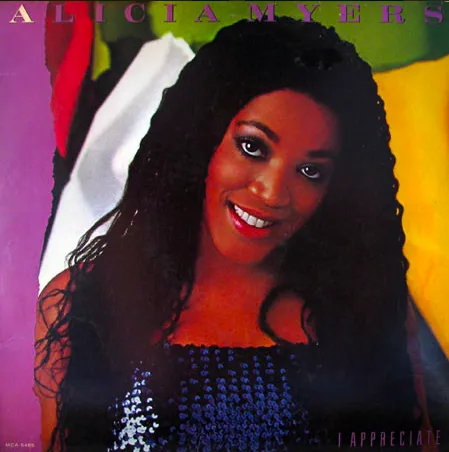
    Alicia Myers is from Detroit, Michigan and was in the band One Way (who we previously inducted for their bouncy hit “Cutie Pie“) before going solo in 1980. She is best-known for the gospel-infused “I Want to Thank You,” a club staple, particularly in NYC. 1984’s “Appreciation” also sounds like it could be a praise song, but with an infectious synth riff, slap bass, and house music piano.

    Here’s the playlist so you can appreciate the rest of this years’ Jheri Curl June songs! See you tomorrow.