Blog

  • Dystopian Book Club Podcast: Peter Criss’ Makeup to Breakup

    Dystopian Book Club Podcast: Peter Criss’ Makeup to Breakup

    Hey, Catfans! We’re now three-quarters of the way through the vanity-project-within-a-vanity-project that is our series of KISS memoir Book Club podcasts; and while it’s obviously too early to say for sure, we have a feeling that this month’s book was the peak. Makeup to Breakup, “written” in 2012 by original KISS drummer Peter Criss, has everything you want in a trashy rock bio: salacious backstage stories, potentially libelous dirt, and a second-act decline that would make Behind the Music green with envy. If you only read one KISS memoir, this is the one. But we’ll still be back in March to close out the tetraptych with a discussion of Paul Stanley’s Face the Music.

    (more…)
  • Dystopian Book Club Podcast: Ace Frehley’s No Regrets

    Dystopian Book Club Podcast: Ace Frehley’s No Regrets

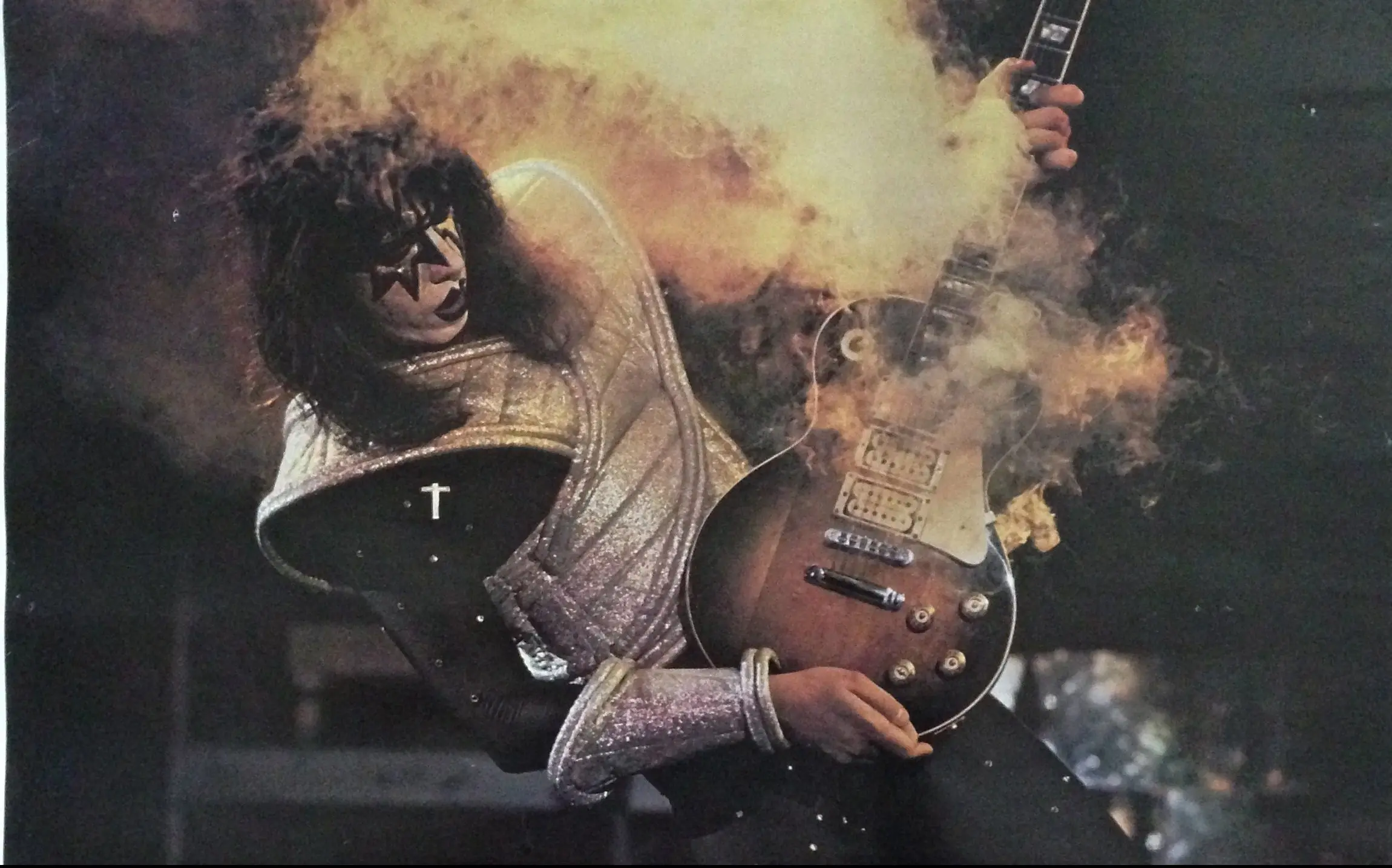
    Our series of Book Club podcasts on the autobiographies of KISS continues with No Regrets, the 2011 memoir by the band’s original guitarist Ace Frehley. Listen to us talk about Ace’s propensity for driving under the influence and analyze the similarities and differences between his and Gene Simmons’ sides of the story–or, put another way, just listen to us bash Gene for another 90 minutes. We’re pretty sure Ace would approve. Show notes are below, and we’ll be back in the New Year with the next installment: Makeup to Breakup by Peter Criss.

    (more…)
  • Dystopian Book Club Podcast: Gene Simmons’ Kiss and Make-Up

    Dystopian Book Club Podcast: Gene Simmons’ Kiss and Make-Up

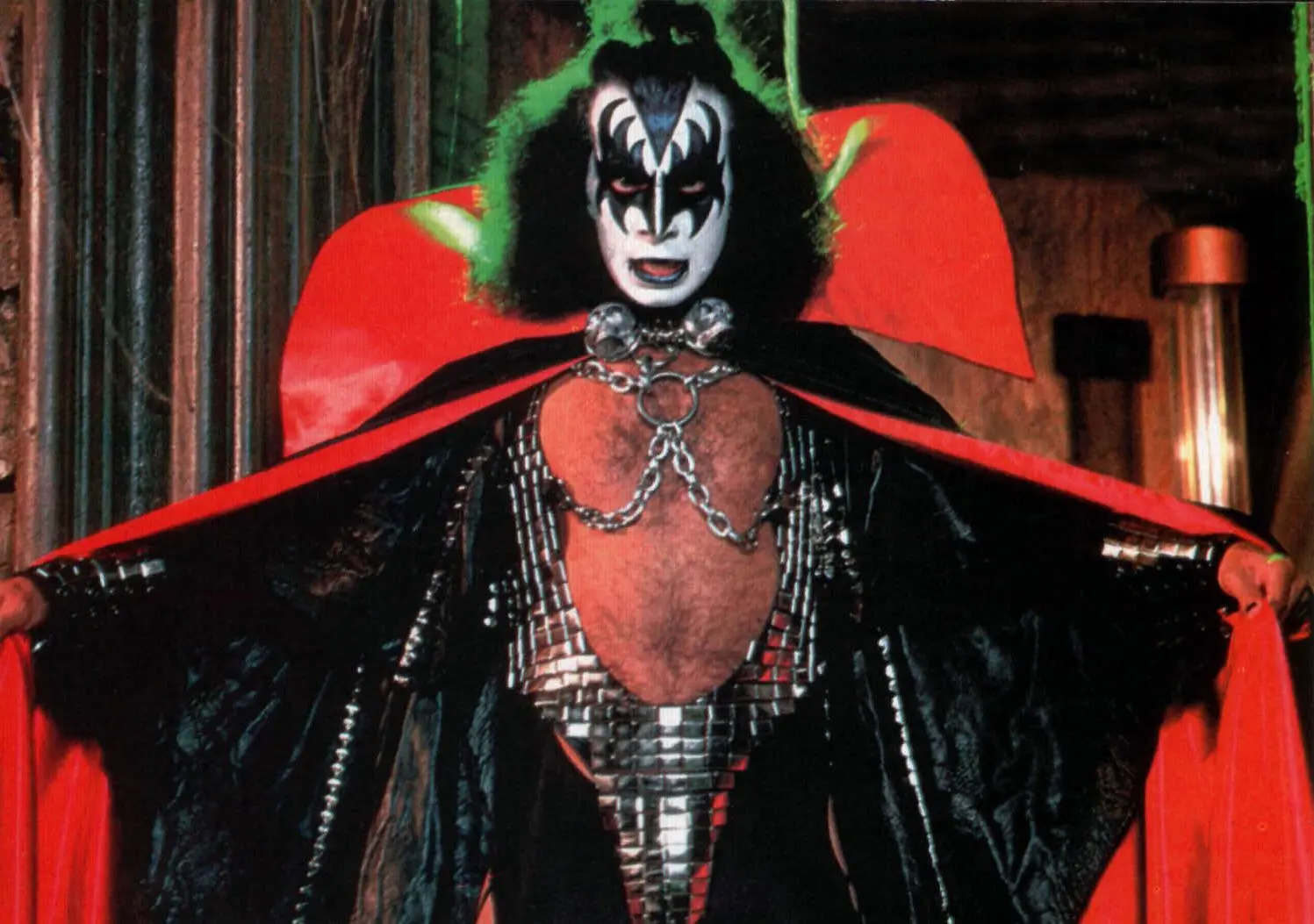
    38 years ago this month, the four original members of KISS did the unthinkable and released four separate solo albums on the same day. Now, Dystopian Dance Party is following in their footsteps, and doing something even less thinkable: we’re reading all four KISS members’ autobiographies and recording our thoughts on them in a series of “Book Club” podcasts. First up is–who else–Gene Simmons, and his 2001 memoir Kiss and Make-Up. The conversation that follows is arguably the snarkiest thing we’ve ever posted on this website (and that’s saying something). You wanted the best, you got the… well, “best” is probably a stretch, but you get the idea. Show notes are below.

    (more…)
  • Jheri Curl June: Scritti Politti’s “Boom! There She Was”

    The last post of Jheri Curl June is always a bittersweet one to write. On the one hand, there’s the satisfaction of knowing we have another solid month’s worth of writing about classic 1980s R&B under our belts; but on the other, there’s the sense of emptiness that comes when we realize we have to wait another whole year before we can start the festivities again. Luckily, Scritti Politti’s ebullient 1988 single “Boom! There She Was” is here to take out some of the sting.

    Scritti Politti’s leader, Green Gartside, is a man after my own heart. Like many British art students in 1977, he was inspired to form a band after catching the Sex Pistols on their legendary “Anarchy” tour; the name “Scritti Politti” was chosen as a play on the political writings (“Scritti Politici”) of Italian Marxist Antonio Gramsci, mixed with Little Richard‘s “Tutti Frutti.” So far, so cool, right? Well, in the early ’80s, Gartside went home to Caerleon, Wales, where he started listening to his sister’s R&B records; then, around the same time, he heard Black radio while visiting Florida. “[T]hat’s where I first heard ‘the funk,’” he later told The Quietus. “The System, Zapp… artists like that. There was a rapid change of influences combined with a disgust at big-I ‘Indie’ being born. It didn’t take long to say, ‘Fuck that, let’s do this instead.’” And by “this,” he of course meant this:

    https://youtu.be/6v-sCVhqG5Y

    I know what some of you are thinking: going from hip, underground post-punk rocker to goofball blue-eyed soul singer ain’t exactly everyone’s idea of an enviable career trajectory. But speaking as a fellow overeducated white boy who rejected the “indie” aesthetic in favor of slickly-produced schlock-R&B, I understand exactly where Gartside was coming from. And besides, “Boom! There She Was” has Roger Troutman on it. Roger! Who doesn’t love Roger?

    So yes, Jh3ri Curl Jun3 is over. But before we know it, boom! There June 2017 will be. I hope to see you again then. In the meantime…you know where to find the playlists.

    (more…)

  • Jheri Curl June: Dan Hartman’s “We Are the Young”

    Few artists exemplify the ability of jheri curl music to cross racial boundaries like Dan Hartman. This is a man who started his career as a sideman for the literal whitest musician of all time, Edgar Winter, and went on to co-write and produce for one of the Blackest, James Brown. So it should come as no surprise that he dabbled in that ultimate hybrid genre, Jheri Curl, in-between.

    Unlike our previous picks for White Boys’ week, however, Dan Hartman’s take on JCM is truly heterogeneous: roughly one part synthesized pop-soul to two parts classic 1980s butt-rock. If his 1984 hit “We Are the Young” wasn’t on the soundtrack to Miami Vice, the producers really missed a trick; this song is basically Don Johnson set to music.

    Tomorrow, sadly, is our last day of Jh3ri Curl Jun3. In the meantime, enjoy the Spotify and YouTube playlists after the jump.

    (more…)

  • Jheri Curl June: Madonna’s “Lucky Star”

    Look, I know we called this final week of Jh3ri Curl Jun3 White Boys’ Week, but I think we would be remiss to talk about jheri curl music’s appropriators without a shoutout to the anointed queen of all swagger-jackers: Madonna. Almost a decade before she brought a sanitized version of Harlem drag ball culture to Middle America with her 1990 smash “Vogue,” the future Material Girl was attempting to crack the R&B charts with her debut single, 1982’s “Everybody”–which, in a brazen act of reverse racial passing, released with a 12″ cover designed by Lou Beach, featuring contemporary “urban” signifiers like brownstone buildings, graffiti, a police officer, a few anonymous children of color…and Madonna’s white ass nowhere to be seen.

    © Sire Records
    © Sire Records

    The ruse didn’t last long, of course; when a music video for “Everybody” was released in early 1983, it became evident that the newcomer who’d been burning up the “Black” charts was as white as the driven snow (I mean, those dance moves alone). But even later that year, when she released her self-titled debut album sporting her now-iconic peroxide-blonde New Wave Marilyn Monroe look, it was easy to hear why so many early listeners had her pegged as an African American artist. Just listen to “Lucky Star,” the album’s fourth and highest-charting single. All the ingredients for jheri curl music we described in our video back at the beginning of the month are present and accounted for: from the crisp, clean-sounding guitar and bass to the Oberheim OB-X synthesizer and Linn drum machine–two tools of the trade that should sound very familiar to fans of Madonna’s 1980s dance-pop peer, Prince.

    So yes, Madonna did jheri curl, and she did it well. But like many a swagger-jacker before and after her, it didn’t take long for her to move on; by her next album, 1984’s Nile Rodgers-produced Like a Virgin, she was taking her sound in a more self-consciously pop-oriented direction. But I have to admit, I still have a soft spot for Madonna’s short-lived jheri curl era–and for the days when the words “Madonna” and “Black” didn’t produce an instant wince of second-hand embarrassment. Go ahead, white girl. You really were the luckiest by far.

    Spotify and YouTube playlists below:

    (more…)

  • Jheri Curl June: Daryl Hall & John Oates’ “I Can’t Go for That (No Can Do)”

    What better way to start White Boy Week here on Jheri Curl June than with the smoothest, most soulful white boy duo, Daryl Hall and John Oates? Hall and Oates began writing and recording music together in 1970, and scored their first number one hit in 1977 with “Rich Girl.” It wasn’t until the 1980s, however, that the duo reached the pinnacle of their hybrid blue-eyed soul/rock/pop/New Wave sound and hit-making potential. 1981’s “I Can’t Go for That (No Can Do)” reached number one on both the Pop and R&B charts, and was the inspiration for the bassline of jheri curl music innovator Michael Jackson‘s “Billie Jean.”

    But Daryl Hall and John Oates did not become the most successful pop duo solely from their songwriting skills, singing prowess, or crossover appeal. Oh no, the 1980s were the music video era, and the inception of MTV in 1981 also had a huge hand in Hall & Oates’ appeal–which is perplexing, since their videos are literally just a collection of weird dance moves, awkward camera angles, and a whole lot of Hall and Oates jumping in front of the camera. I mean, sure, there was definitely a learning curve for everyone with early music videos–as we saw earlier this month with Patrice Rushen–but Hall & Oates are truly better heard and not seen. Some of their videos definitely should have been career enders, much like Billy Squier’s ill fated video for “Rock Me Tonite” (“Method of Modern Love,” I’m looking at you).

    The video for “I Can’t Go for That” actually isn’t that bad, as far as Hall & Oates videos go–although the entire first minute is just a bunch of closeup shots of Daryl’s hands interspersed with clips of him wandering back and forth in front of the camera. The simple black background and lighting is a nice complement to the song’s steamy soul sound, though, with bonus points for John Oates’ and saxophonist Charles DeChant’s synchronized hand gestures toward the end.

    Jheri Curl June White Boy Week continues tomorrow with more music from artists who could never pull off an actual jheri curl. Spotify and YouTube playlists are below!

    (more…)

  • Jheri Curl Cinema: Coming to America (1988)

    When we decided to expand the focus of Jheri Curl June last year to include cinema, I knew there were two films I absolutely had to write about: Purple Rain and Coming to America. As it turned out, I was only able to work the former into our schedule. This year, however, I’m making amends.

    Coming to America, directed by John Landis in 1988, has done more for the continued relevance of the jheri curl than any other cultural force save, perhaps, for Michael Jackson. Run a Google Image or YouTube search for “jheri curl”–which I have, many more times than I should probably admit, in the course of my duties for this blog–and references to Coming to America will almost certainly be among the first hits. For that matter, just bring up the movie in conversation, and chances are the scenes you remember will be jheri-curl-related: the couch stained with activator grease, Randy Watson and Sexual Chocolate (see above), fuckin’ Soul Glo. Coming to America isn’t just Jheri Curl Cinema: it’s practically cinema about jheri curls.

    (more…)

  • Jheri Curl June: Loose Ends’ “Watching You”

    As we’ve mentioned in past Jheri Curl Junes, by the end of the 1980s jheri curl music had been overshadowed by fresher genres like hip-hop and New Jack Swing. Loose Ends’ 1988 hit “Watching You” is a perfect example: it’s still very much a Jheri Curl song, but the beat knocks harder and the production is less slick, favoring horns over synthesizers.

    Indeed, the rise and fall of jheri curl music corresponds exactly with Loose Ends’ timeline. The musical trio of vocalist and guitarist Carl McIntosh, lead vocalist Jane Eugene, and keyboardist Steve Nichol formed in 1980, but by 1989 they chose to split up due to disagreements over the group’s musical direction. McIntosh did record a final album under the name “Loose Ends,” 1990’s Look How Long, with a new lineup and an approach that delved further into the emerging hip-hop sounds of the ’90s; even this group ultimately disbanded, however.

    So with that, we’ve once again reached the tragic, yet inevitable decline of the Jheri Curl Era. But the late ’80s weren’t all bad: check back tomorrow for our long-overdue post on one of the cornerstones of Jheri Curl Cinema, John Landis‘ 1988 Coming to America. And as always, check out our ever-growing Spotify and YouTube playlists after the jump.

    (more…)

  • Jheri Curl June: The B.B. & Q. Band’s “(I’m a) Dreamer”

    Probably the best thing about having a girlfriend whose mother is Black and lived through the 1980s is that I’m never short on jheri curl music recommendations. Just last week, in fact, Kia (via her mom) hipped me to a track I’d never heard before: the très-jheri 1986 single “(I’m a) Dreamer” by Italo-post-disco act the B.B. & Q. Band.

    “B.B. & Q.” stands for “Brooklyn, Bronx, and Queens,” but to be fair there probably should have been an extra “B.” in there–for Bologna, Italy, the home base of Franco-Italian svengali Jacques Petrus, who assembled the “band” from a crew of New York-based singers and session musicians to follow up on the success of his previous, Luther Vandross-fronted studio project, Change. In the U.S., at least, the B.B. & Q. Band never quite reached the heights of their predecessor; but “Dreamer” did hit #35 on the U.K. charts, and its parent album, 1985’s Genie, helped launch the career of then-lead singer Curtis Hairston.

    Unfortunately, however, it didn’t last: the B.B. & Q. Band dissolved in the most bizarre way possible in 1987, when Petrus was murdered under mysterious circumstances while on the run from tax evasion charges in the French West Indies. Somewhere, though, there’s a Tarantinoesque crime movie waiting to be made out of the life and death of Jacques Petrus. And fortunately, thanks to tracks like “Dreamer,” its soundtrack will be perfect.

    Listen to “Dreamer,” and the rest of our Jh3ri Curl Jun3 selections thus far, on the Spotify and YouTube playlists below:

    (more…)